Most coding decisions start with the printer. This one should start with the package. CIJ, TIJ and DOD all put ink directly on the product or case, and for a date code or lot number that is usually the fastest and lowest cost way to mark. Some jobs ask for more than ink on a surface can deliver. That is where print-and-apply labeling comes in.
In this guide
The short answer
- Choose print-and-apply labeling when a customer or standard specifies a label, when the surface will not hold a clean code, when the barcode must scan every time or when you need more data than a printhead can cover.
- Choose CIJ, TIJ or DOD inkjet coding for simple date and lot codes, for curved or fast-moving products and for clean corrugate that takes ink well.
- Most lines use both: Inkjet on the product, a case coder or labeler on the case and a print-and-apply label on the pallet.
- Compare cost per readable, accepted mark, not the price of the printer.
Earlier this year we explained why print-and-apply still earns its place on the line. This article takes the next step: The specific situations on a production floor where a label is the better call, where inkjet still wins and the questions that settle it.
The stakes are practical. A code that looks fine at the printer can still fail at a customer’s receiving dock, and by then the pallet has already shipped. Matching the technology to each level of packaging is how plants avoid finding that out the hard way.
Two Ways to Put Data on a Package
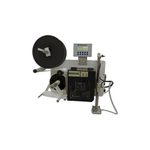
Direct coding prints on the package itself, so the result depends on how the ink and the surface get along. Print-and-apply prints on a label first, usually by thermal transfer or direct thermal, then applies it by tamp, wipe, blow or corner wrap. The print surface is the same every time, no matter what is underneath.
| Technology | How it marks | Typical strength | Typical limit |
|---|---|---|---|
| Print-and-apply | Prints a label, then applies it | Dense barcodes and large information panels on almost any package | Label stock and ribbon to manage, more moving parts |
| CIJ | Small character ink stream, non-contact | Date and lot codes on curved or non-porous primary packaging at high speed | Lower resolution, not built for dense barcodes |
| TIJ | Cartridge-based high resolution inkjet | Sharp text and codes on cartons with very little maintenance | Short throw distance, and the surface must suit the ink |
| DOD / piezo | Large character and high resolution case coding | Text, logos and barcodes printed directly on corrugated cases | Results depend on the color and absorbency of the corrugate |
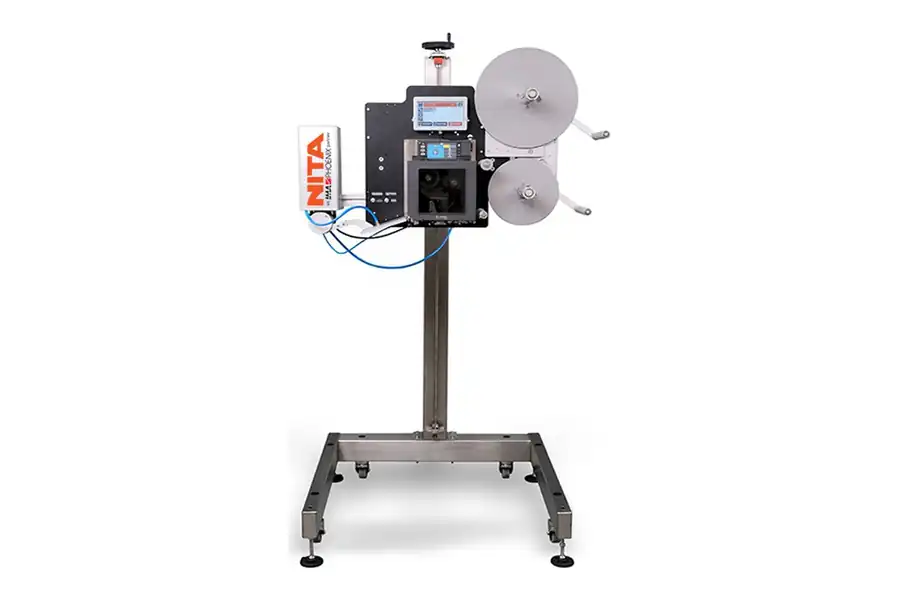
How the label gets onto the package matters as much as how it is printed. A tamp applicator presses the label onto the case. A wipe applicator lays it on as the product passes. A blow applicator places it without touching the product, and a corner wrap applies one label across two panels. The right method depends on line speed, package shape and how much the product position varies on the conveyor.
Six Situations Where the Label Wins
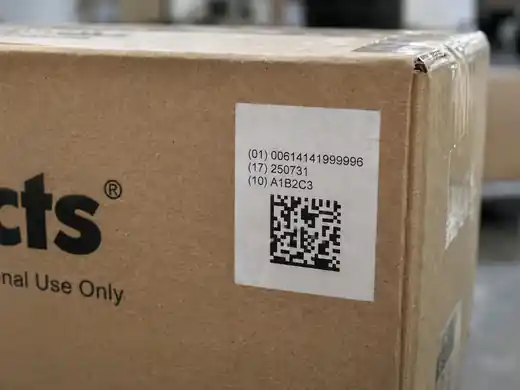
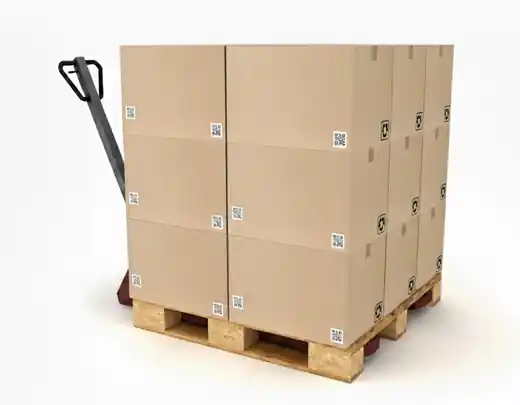
- Your customer specifies a label. Many retailers and distributors write a label format into their supplier requirements. For pallets, the GS1 Logistic Label carries the SSCC in a GS1-128 barcode. When the requirement names a label, the technology decision is already made, and the real work is getting the right data to the labeler for every pallet.
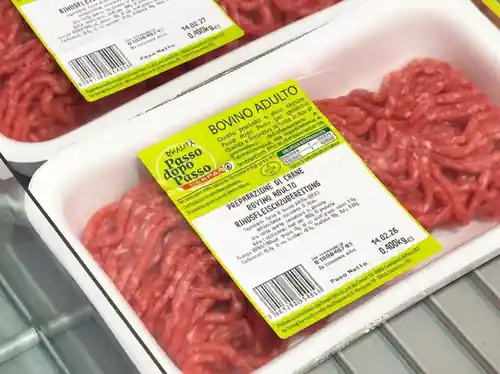
- The surface will not hold a clean code. Dark or printed cases, glossy coatings, shrink-wrapped trays and recycled corrugate with uneven absorbency can all reduce contrast or adhesion. Ink that looks sharp on one supplier’s board can feather or fade on the next. A white label gives the barcode the same background every time.
- The barcode has to scan the first time, every time. Black print on a white label gives scanners strong contrast and crisp bar edges. If failed scans lead to rework, rejected shipments or chargebacks, that consistency is worth paying for. It also makes barcode verification far more predictable from one shift to the next.
- You need more information than a printhead can cover. Ship-to data, several barcodes, handling statements and logos fit on one label, applied in one step. Doing the same with direct printing can mean stacking printheads, which adds cost and alignment work.
- The label has to be read from two sides. A corner wrap applicator places one label across two adjacent panels, so the case can be scanned from either side on the conveyor or the pallet. Direct printing would need a printer on each side to do the same.
- Your packaging keeps changing. Lines that run many SKUs, case suppliers or materials spend time requalifying inks and settings. The label takes the surface out of the equation, so a packaging change does not become a coding project.
Where Direct Inkjet Still Wins
Print-and-apply is not the answer to everything, and a good integrator will tell you so.
- Simple date, lot and time codes on primary packaging. CIJ and TIJ handle these with no label stock at all.
- Curved, small or fast-moving products. Bottles, cans, pouches and extrusions are what non-contact CIJ printing is built for.
- Clean, light-colored corrugate that takes ink well. A high resolution DOD case coder prints text, logos and barcodes directly on the case with no labels, ribbons or liner waste.
- Tight spaces. An inkjet printhead needs far less room on the line than a label applicator.
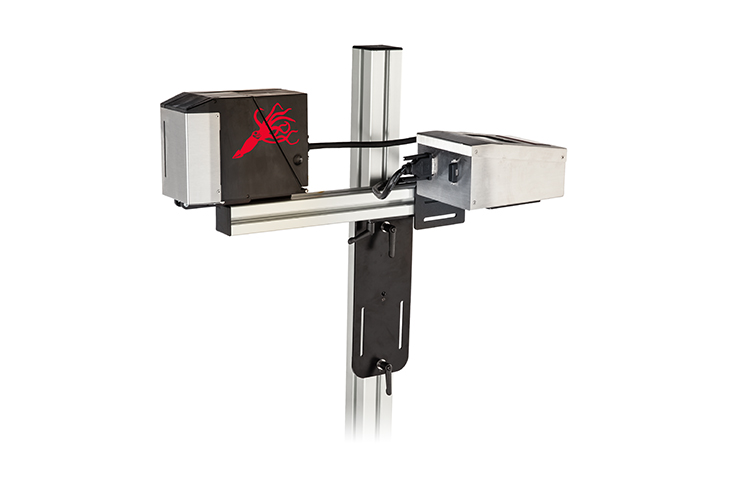
Consumables matter too. Inkjet uses ink and, for CIJ, solvent. Print-and-apply uses labels and usually ribbon, and someone has to change the rolls. Neither is free. The fair comparison is cost per readable, accepted mark, not cost per printer.
Print-and-Apply Has Changed
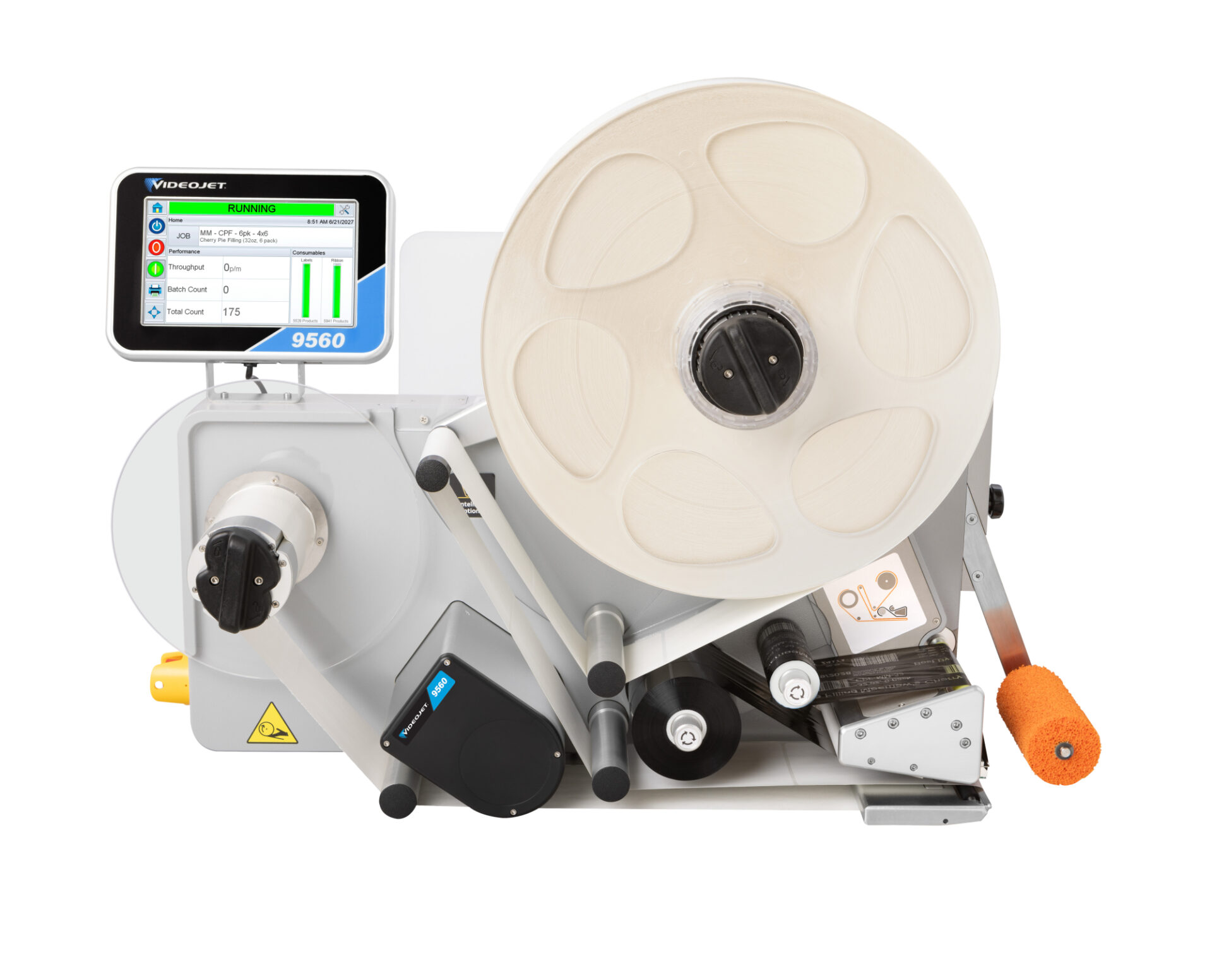
Much of the hesitation about labelers comes from older machines: Label jams, constant mechanical adjustments and a compressed air line to every applicator. Current designs address those complaints directly. Videojet describes its 9560 as a Direct Apply system that prints and applies the label onto a passing pack at conveyor speed, without a tamp applicator and without plant air. The company lists speeds of up to 150 packs per minute depending on label size, and label and ribbon changes in under 60 seconds.
For the buyer, the point is simple: Judge print-and-apply by what current equipment does, not by the labeler that was on the line fifteen years ago.
One Line, Three Levels of Packaging
The choice is rarely all or nothing. Most lines mark at three levels, and each level favors a different tool.
| Packaging level | Typical data | Common choice |
|---|---|---|
| Product (primary) | Date code, lot number, time | CIJ or TIJ, printed directly on the product |
| Case (secondary) | Product ID, barcode, lot, date | DOD on corrugate that takes ink well, print-and-apply when a label is specified or the surface is difficult |
| Pallet (logistic unit) | GS1 Logistic Label with SSCC | Print-and-apply |
Using CIJ on the product, a case coder or labeler on the case and a labeler on the pallet is not indecision. It is each technology doing the job it does best.
Five Questions That Settle It
- Does a customer, retailer or regulation specify a label format or a barcode grade?
- What are you printing on, and how often does that material change?
- How much data has to fit, and how small are the bars?
- Where does the package go after it leaves your dock, and what will it rub against, sit in or be scanned by?
- What does a failed scan cost you today?
Answer these with real packaging in hand and the choice between a label and a direct code is usually clear. Where it is not, a side by side test on your own cases settles it faster than any specification sheet.
How PLI Helps
Pacific Labeling & Integration is an authorized distributor, reseller and service center for Videojet, Label-Aire and NITA labeling systems, as well as LEIBINGER CIJ and Squid Ink coding systems. Because we install and service both sides of this decision, the recommendation starts with your application, not with a product.
If you are weighing a label against a direct code, call (833) 424-9227, email info@pacificlabeling.com or contact PLI and tell us what you are marking.
Frequently asked questions
Is print-and-apply more expensive than inkjet?
Labels and ribbon usually cost more per mark than ink. The total can still be lower when the label prevents rework, rejected shipments or relabeling.
Can a DOD case coder print a scannable barcode?
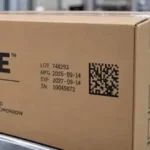
Yes, on corrugate that suits the ink. Results depend on the case material, so test on your actual cases.
Can we use labels on only some products?
Yes. Many lines keep the inkjet coder and add a labeler for the customers or SKUs that require one.
Is print-and-apply slower than inkjet?

Inkjet is faster on small primary products. On cases, current labelers are built to keep pace with end-of-line speeds when they are integrated properly.
Thermal transfer or direct thermal?
Thermal transfer uses a ribbon and gives a more durable print. Direct thermal uses heat-sensitive label stock with no ribbon and suits short-life shipping labels.
Does print-and-apply need compressed air?
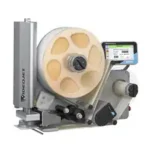
Not always. Many tamp and blow applicators run on plant air, while all-electric and direct apply designs do not.
Can one labeler handle different case sizes?
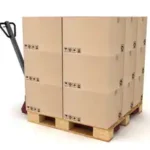
Yes. Applicators such as a variable tamp are designed for packages of differing heights, and job changes are made at the controller.
Can both approaches print 2D codes?
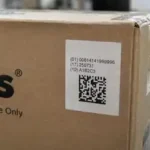
Yes. What matters is how the code grades on your material, so verify it on real packaging before you commit.
Sources
- GS1 Logistic Label Guideline
- GS1 UK: How do I create SSCCs and logistics labels
- Print-and-Apply Labeling in Modern Production Facilities, Pacific Labeling & Integration
- Comparing Industrial Coding, Marking and Print-and-Apply Labeling Technologies, Pacific Labeling & Integration
- Videojet 9560 Print & Apply Labeling brochure, videojet.com
- Label-Aire print and apply systems, label-aire.com
- NITA Labeling Systems, nitalabeling.com
- LEIBINGER CIJ technology, leibinger-group.com
- Squid Ink coding and marking systems, squidink.com