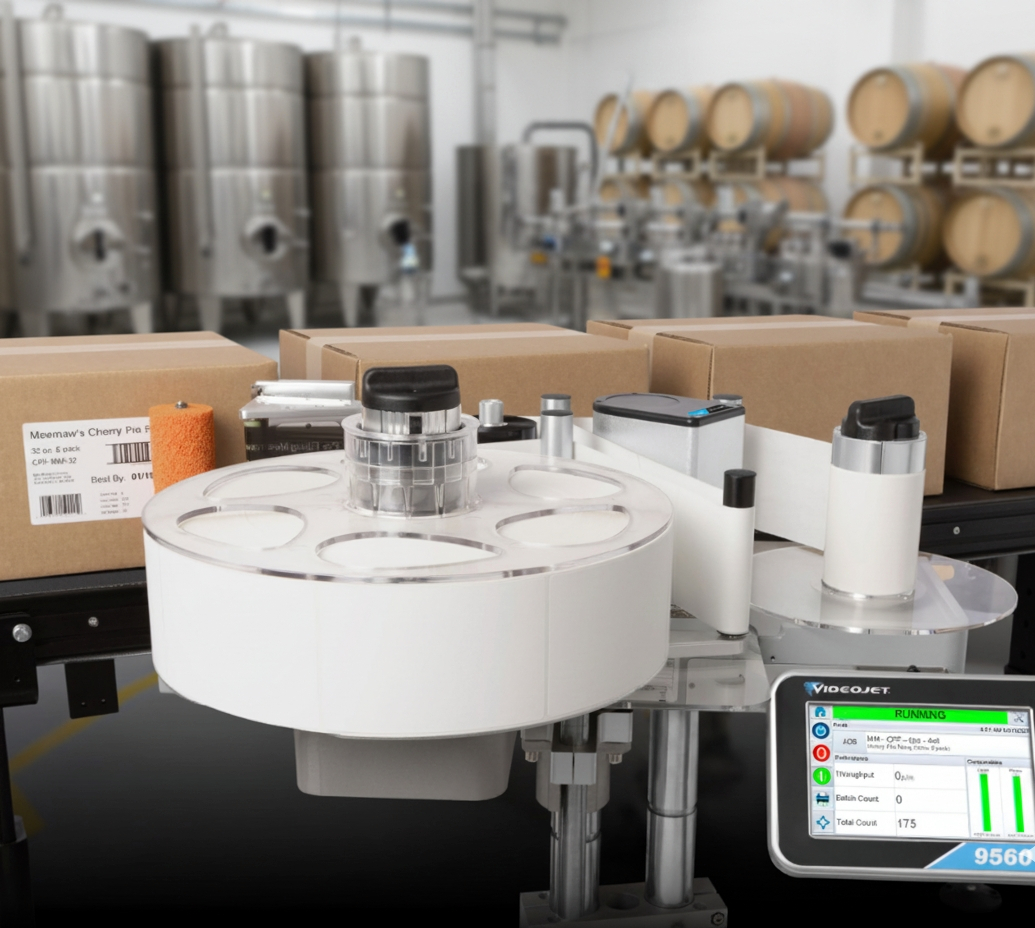
How Labeling and Print and Apply Systems Impact Throughput, Labor and Compliance
Prepared for Pacific Labeling & Integration
Audience: Operations leaders, plant managers, packaging engineers, maintenance and logistics teams
Executive Summary
Labeling systems rarely receive the same level of attention as primary production equipment. They are often installed near the end of the line and expected to operate without issue. In practice, labeling is one of the most common sources of production disruption and one of the least measured contributors to operational cost.
When labeling slows down, entire lines slow down. When labels are misapplied, products are reworked. When pallet labels fail, shipments are delayed. These interruptions often appear small, but over time they create significant cost.
Most facilities evaluate labeling equipment based on purchase price. The real cost of labeling is driven by downtime, labor, integration quality and compliance risk. These hidden costs accumulate quietly and often exceed the initial investment in equipment.
This paper examines where labeling downtime originates, how it affects production and how facilities can reduce cost per labeled unit by improving system selection and integration.
Section 1
Where Labeling Downtime Really Comes From
Labeling downtime typically results from repeated small interruptions rather than major failures. Common causes include label jams, inconsistent spacing, sensor misreads, printer communication issues and operator adjustments.
Each interruption may last only a few minutes. Over time, these minutes accumulate into hours of lost production. Because they are dispersed across shifts and lines, they are often not tracked as a single category of loss.
Common causes of labeling downtime
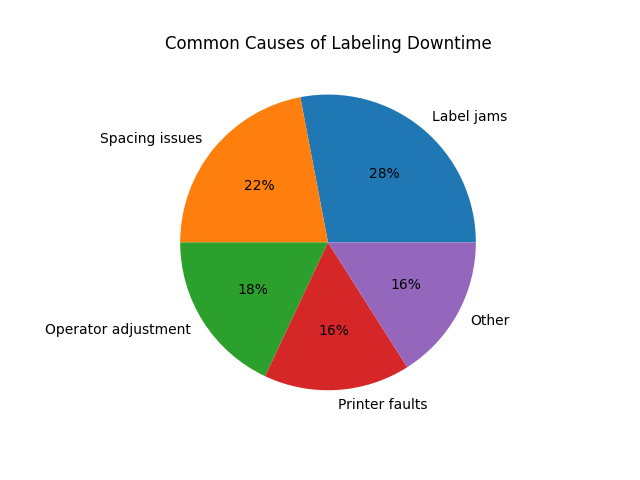
In many facilities, labeling sits at the end of the line. When labeling slows, upstream production must slow as well. Products accumulate, operators intervene and throughput decreases. What begins as a labeling issue quickly becomes a production issue.
Understanding the sources of downtime is the first step toward reducing it.
Section 2
The Cost per Label Model
To understand the economics of labeling, facilities must measure cost per labeled unit rather than equipment price alone. Cost per label includes labor, downtime, rework, waste and compliance risk.
Manual labeling may appear cost effective at low volumes. As production increases, labor costs rise and consistency becomes harder to maintain. Automated systems often require higher upfront investment but reduce long term cost through improved reliability and reduced labor.
Manual vs automated labeling cost curve
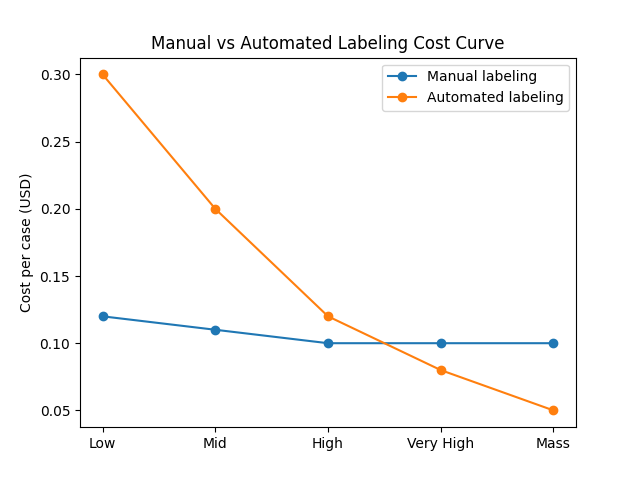
As volume grows, automation typically lowers total cost per labeled unit. Measuring cost per label provides a more accurate view of labeling economics and helps guide investment decisions.
Section 3
Logistics and Compliance Impact
Labeling accuracy affects not only production but also logistics. Misapplied or unreadable labels can result in rejected shipments, retail chargebacks and delayed deliveries.
Logistics impact of labeling errors
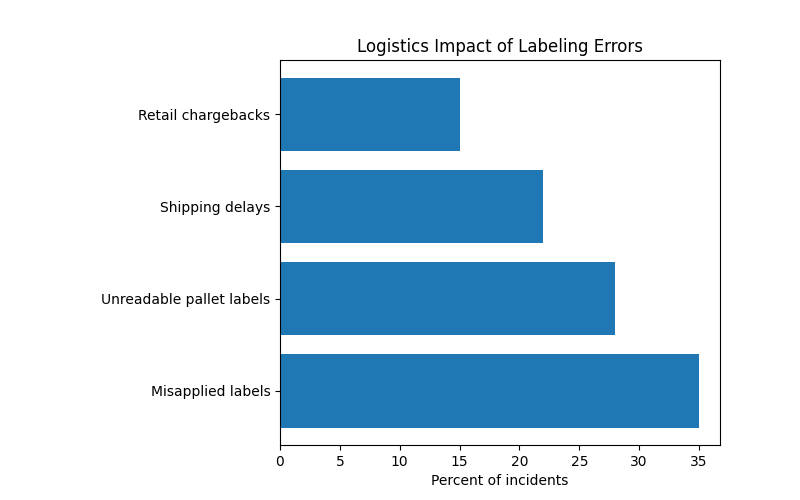
In regulated industries, labeling errors can affect traceability. Pallet labels must be readable and correctly placed to ensure smooth movement through the supply chain. Reliable print and apply systems help maintain this consistency.
When labeling systems are unreliable, downstream operations are disrupted. Shipping schedules may need to be adjusted and products may require relabeling.
Section 4
Labor and Downtime Cost Components
Labor and downtime are often the largest contributors to labeling cost. Manual labeling requires constant operator involvement and introduces variability. Automated systems reduce labor but must be properly integrated to achieve consistent performance.
Cost components by labeling approach
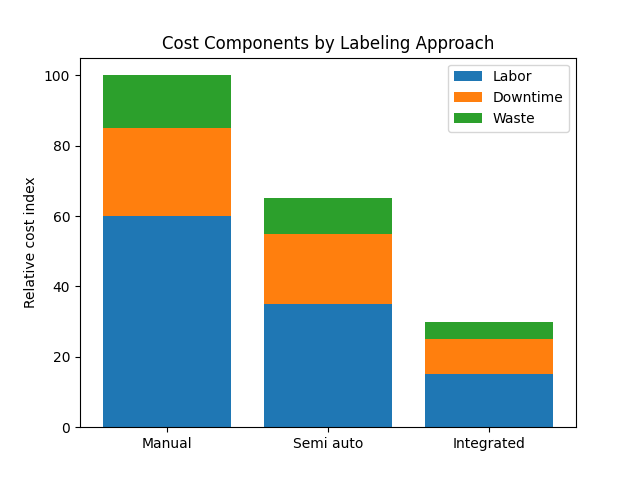
Reducing downtime and labor can significantly lower cost per labeled unit. Reliable labeling systems and proper integration help achieve these reductions.
Section 5
Decorative Labeling and Brand Impact
In consumer product environments, decorative labeling directly affects brand presentation. Misaligned or wrinkled labels can lead to rework and waste. Consistent placement supports both appearance and efficiency.
Impact of high-quality decorative labeling
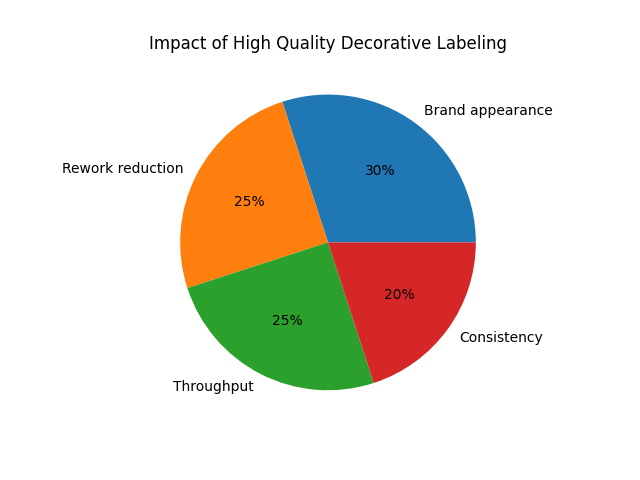
Higher precision decorative labeling systems maintain consistent placement at higher speeds. While these systems may involve greater upfront investment, they often reduce rework and improve throughput.
Reliable decorative labeling supports both operational efficiency and brand perception.
Section 6
Integration Matters More Than Equipment
Labeling performance depends on how well systems are integrated into the production line. Poor integration can cause spacing issues, sensor misreads and increased operator intervention.
Effect of integration on labeling uptime
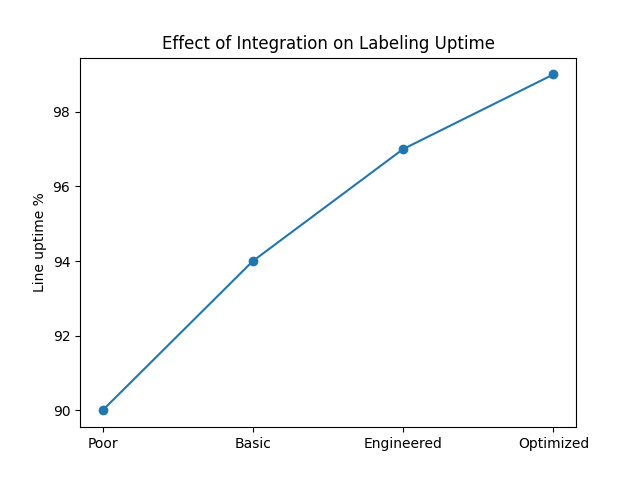
Proper integration ensures labeling systems operate in sync with upstream and downstream equipment. Engineering and system design play a key role in achieving consistent performance.
Section 7
Matching Technology to Application
Different labeling applications require different levels of automation. Decorative labeling, case labeling and pallet labeling each present unique challenges.
Some environments require high precision and speed. Others prioritize simplicity and cost control. Selecting the appropriate technology depends on production volume, labor availability and compliance requirements.
Matching the system to the application and integrating it properly helps maintain reliability and efficiency.
Section 8
Case Example
A mid volume packaging facility relied on manual labeling. As production increased, labor costs rose and labeling errors became more frequent. Shipping delays and rework affected throughput.
After transitioning to automated labeling and improving integration:
- throughput increased
- labor decreased
- consistency improved
- shipping delays were reduced
The investment in equipment and integration produced long term operational benefits.
Section 9
Building a Labeling Strategy
To reduce labeling downtime, facilities should:
- measure cost per labeled unit
- reduce manual intervention
- improve integration
- standardize equipment
- monitor uptime
Labeling should be treated as a critical production system rather than a final step.
Conclusion
Labeling is often seen as a minor part of production. In reality, it plays a major role in throughput, labor cost and compliance. Small interruptions at the labeling station can stop entire lines and create ripple effects throughout the operation.
The true cost of labeling is not the price of the labeler. It is the cost of downtime, rework, labor and shipping disruptions. Facilities that focus only on upfront equipment cost may overlook these hidden factors.
Improving reliability and integration can reduce cost per labeled unit and improve overall efficiency. As production demands increase and supply chains become more complex, dependable labeling systems will continue to play a critical role in maintaining productivity and meeting customer expectations.
Understanding the hidden cost of labeling allows manufacturers to make informed decisions that support long term growth and operational stability.
Q and A Section
What is cost per label?
Cost per label includes labor, downtime, waste and rework in addition to equipment cost.
Why does labeling affect production so much?
Labeling is often located at the end of the line. Delays here can stop upstream production.
Does automation always reduce cost?
At higher volumes, automation often reduces total cost per unit by lowering labor and downtime.
Why is integration important?
Proper integration ensures consistent spacing and placement, improving uptime.
How does labeling affect shipping?
Unreadable or incorrect labels can delay shipments and create compliance issues.
References
Overview of industrial labeling automation and packaging line efficiency
https://www.packworld.com
Print and apply labeling technology and logistics labeling systems
https://www.videojet.com
Pressure sensitive labeling fundamentals and application considerations
https://www.labelingnews.com
GS1 logistics labeling and traceability standards
https://www.gs1.org
Best practices for labeling and packaging line integration
https://www.packagingstrategies.com
Pacific Labeling & Integration company resources and system overview
https://www.pacificlabeling25.local